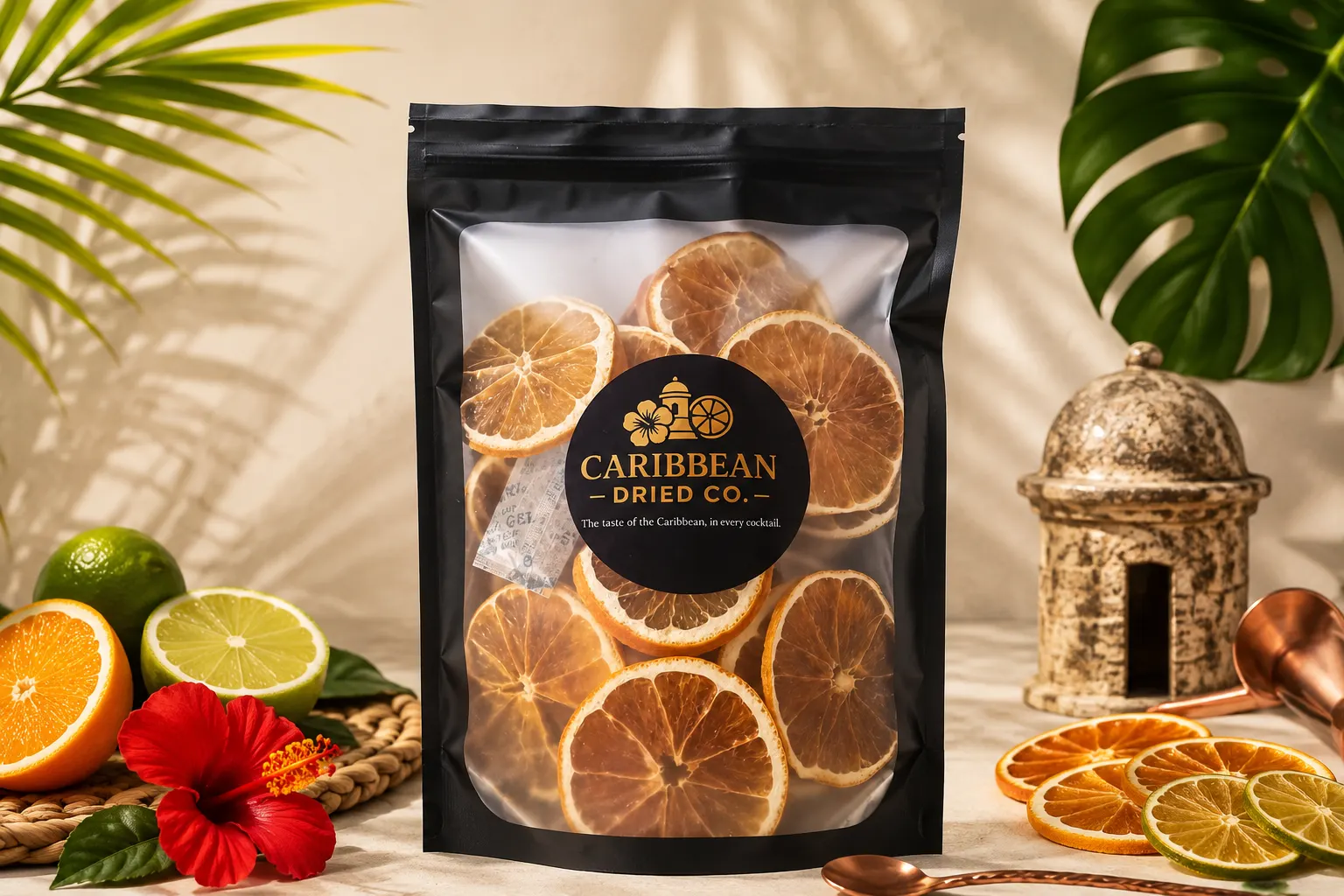
In cocktail making, garnish is often the final detail: a wheel, leaf, flower, or peel placed just before serving.
A thoughtful finish does more than decorate. It can change what we smell before tasting the drink, shape expectations for the first sip, and complete the cocktail’s story.
We drink with our eyes first
Before tasting, we already notice color, glassware, ice, and texture. An orange wheel on a dark cocktail suggests citrus notes; lemon on a clear drink signals freshness; tropical fruit directs the imagination toward the Caribbean.
The garnish is a visual cue for what comes next.
Aroma arrives before flavor
As the glass approaches, the garnish usually sits close to the nose. A citrus wheel, peel, or aromatic herb can reach the senses before the liquid and influence how the drink is perceived.
Placement matters. Looking good is not enough; the finish should make sense within the full experience.
It should speak to the drink
Orange
Works with rum, whiskey, bourbon, bitter aperitifs, sangria, iced tea, and spiced profiles.
Lemon or lime
Pairs with gin, vodka, tonic water, margaritas, zero-proof drinks, tea, and light or herbal preparations.
Pineapple
Complements rum, coconut, passion fruit, tropical drinks, and frozen recipes.
Fresh and dried: two different experiences
Fresh fruit brings juice, moisture, immediate aroma, and vivid color. Dried fruit offers visual consistency, easier storage, less preparation during service, and a more structured look.
One does not necessarily replace the other. The right choice depends on the effect you want.
Less can be more
Too many elements compete with the drink. One well-chosen wheel can have more impact than a crowded arrangement.
In a professional bar, presentation must also be repeatable. Size, color, storage, and serving speed all influence the consistency each customer receives.
The best garnish does not distract from the glass. It completes it.
Created and served from Humacao, Puerto Rico.
Discover another article →